Items
-
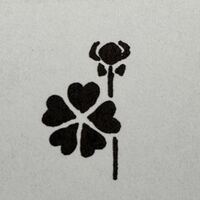
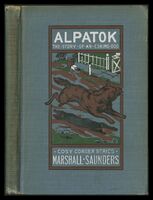 Alpatok Cloverleaf
-
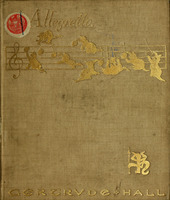 Allegretto Cat monogram
-
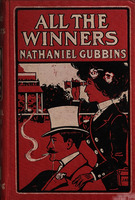 All the Winners JAD
-
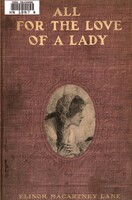 All for the love of a lady Unsigned
-
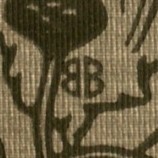
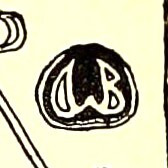 Alice Bolingbroke Woodward Alice didn't often sign her cover designs, but in her illustrations she used a monogram of a central W flanked by an 'A' and a 'B'. She also had a habit of incorporating her monogram into part of the illustration, making it difficult to spot at first glance.
-
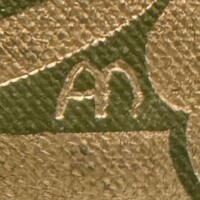
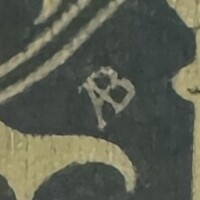 Alfred Brennan Alfred's monogram was a pointed A joined with a very round B.
-
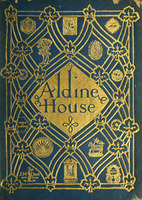 Aldine House W with sides higher than middle
-
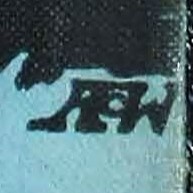
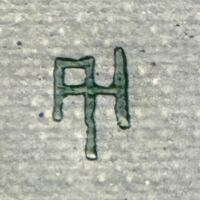 Alberta Hall Her monogram is a conjoined AH
-
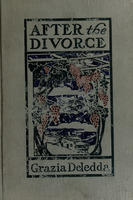 After the divorce, a romance BS |BS
-
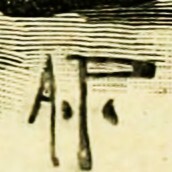
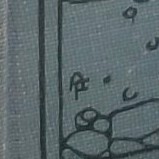 AF stacked A rounded A on top intersecting with an F below it
-
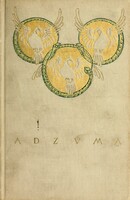 Adzuma This cover was issued in both white and green variants, during the same year of publication.
-
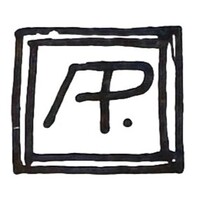
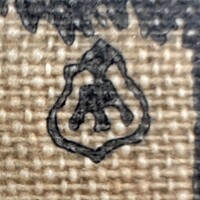 Adrian J. Iorio Adrian's monogram was a letter A bisected by a capital letter I.
-
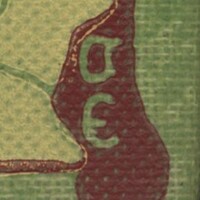 Adelaide Everhart Adelaide was the daughter of the Reverend George Marlow Everhart (1826-1891), an Episcopal minister. She was an artist and illustrator of children's books. Her paintings hung in the Georgia capitol building.
-
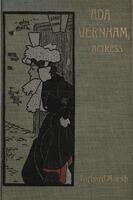 Ada Vernham, actress Reginald Rigby
-
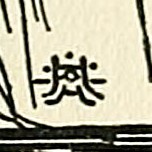
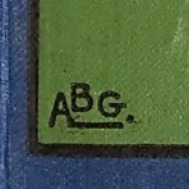
 Ada Budell Ada's monogram was an A with a rounded or outwardly curving left stem connected with a B. Sometimes she also would use a separated A and B, with or without dots in between the letters.
-
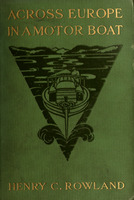 Across Europe in a motor boat Unsigned
-
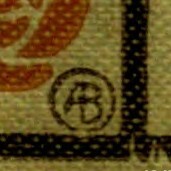 AB in circle (Alice Ball, maybe) A monogram used by a designer that is speculated to be Alice Ball, the wife of Thomas Watson Ball.
-
 A. B. C. guide to photography illustrated RP conjoined
-
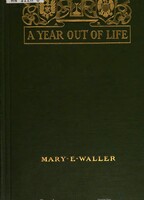 A year out of life AR (letters separated)
-
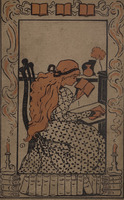 A world of girls S in circle
-
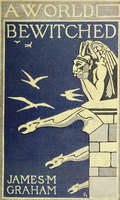 A world bewitched Signed with a lowercase 'h' at the bottom of the front cover.
-
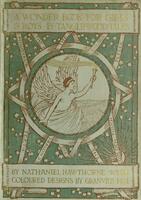
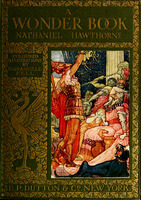
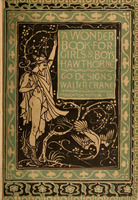 A wonder book for girls & boys C with a crane
-
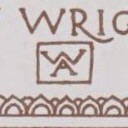
 A woman's story W in box
-
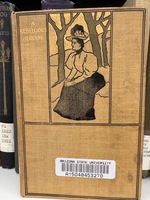
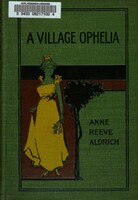 A village Ophelia Circle thing
-
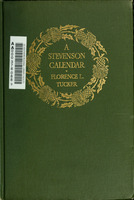 A Stevenson calendar Unsigned
-
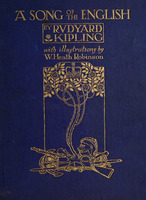
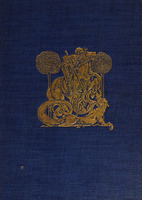 A Song Of The English Republished in 1914 with the same
-
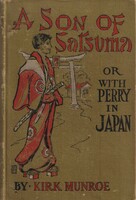 A Son of Satsuma BS in box
-
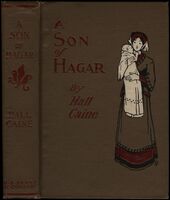 A son of Hagar WEBS
-
 A self-made man's wife Unsigned
-
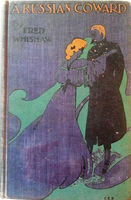 A Russian Coward CED
-
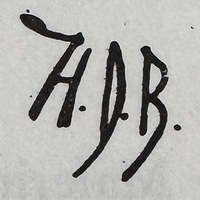
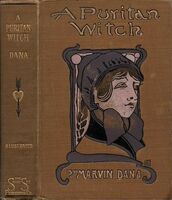 A puritan witch HBM
-
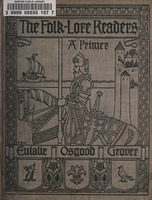 A Primer TBH
-
 A pomander of verse "Of this edition 750 copies have been printed for England and America"



































6501–6750 of 7033